

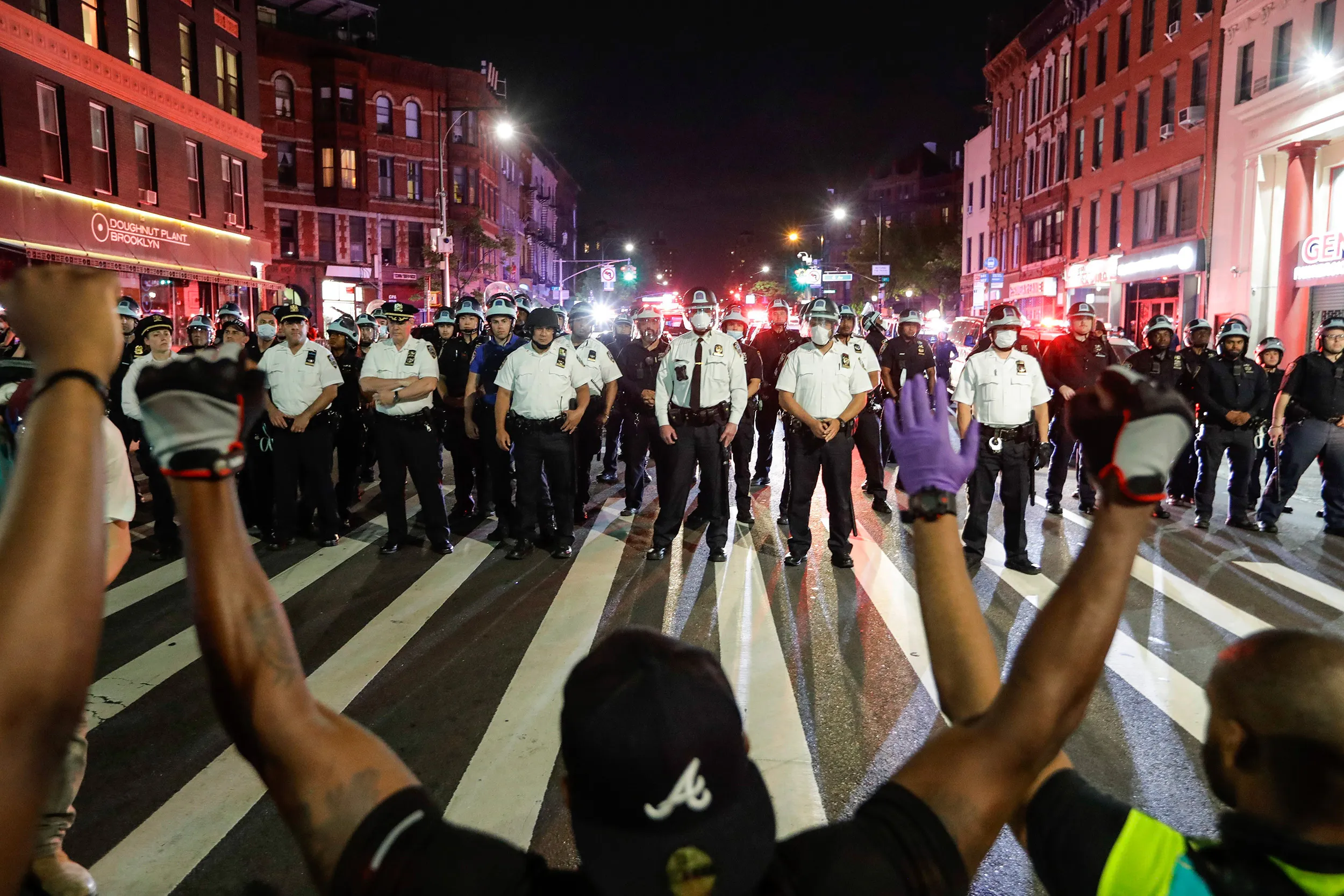
Police brutality cases sit at the intersection of constitutional rights, public safety, and community trust. When force crosses the line into illegality, civil rights law provides the roadmap for accountability, most often through Section 1983 lawsuits, but also via state tort claims, federal pattern-or-practice investigations, and administrative oversight. This article unpacks how these claims work, why body-cam footage now anchors courtroom narratives, how racial bias is argued under the Constitution, and where oversight boards, landmark settlements, and mental-health advocacy fit into the broader push for reform. Along the way, it offers grounded reflections on police brutality cases and what actually moves the needle in courtrooms and city halls.
Understanding Section 1983 claims in police misconduct litigation
Section 1983 is the backbone of most civil lawsuits alleging police misconduct. It allows individuals to sue state or local officials for violating rights secured by the Constitution or federal law. In police brutality cases, the core constitutional claims typically arise under the Fourth Amendment (excessive force during a seizure), the Fourteenth Amendment (when pretrial detainees are involved), and sometimes the First Amendment (retaliation against those who record or criticize officers). For additional resources on federal civil rights litigation and case evaluation procedures, Contact us to learn how experienced legal teams assess Section 1983 claims in New York.
Three pillars define these cases:
- Constitutional violation: Plaintiffs must show that an officer’s actions were objectively unreasonable under the circumstances. Graham v. Connor sets the standard, courts look at the severity of the suspected crime, whether the person posed an immediate threat, and whether they were resisting or fleeing.
- Color of law: The officer must have acted under color of state law, on duty, using police authority, or leveraging official power.
- Causation and damages: The violation must cause actual harm, which might include physical injuries, emotional distress, lost wages, or wrongful death damages.
Municipal liability (Monell) is another layer. Cities aren’t automatically liable, but they can be if a policy, practice, or failure to train amounts to deliberate indifference and causes the violation. Monell claims often require pattern evidence, prior complaints, internal memos, or training gaps that show the problem wasn’t an isolated misstep.
Qualified immunity frequently surfaces as a threshold defense. Courts ask whether the right was “clearly established” at the time. Plaintiffs increasingly marshal fact-specific precedent and expert testimony to overcome it, showing that no reasonable officer could believe the force used was lawful. It’s technical, but decisive.
State-law claims (assault, battery, negligence, and wrongful death) may run alongside Section 1983 counts, subject to notice requirements and immunities. Smart litigation blends these paths to widen the remedies available and hedge against procedural pitfalls.
Video evidence and body-cam data shaping courtroom outcomes
The rise of body-worn cameras, dashcams, bystander videos, and surveillance footage has changed the evidentiary landscape. Jurors now expect video. Judges often look to it early when ruling on qualified immunity. But video isn’t magic: it needs framing, expert interpretation, and context.
Key dynamics:
- Angle and audio matter: A wide-angle, chest-mounted body-cam can distort distance and speed. Sudden movements look more dramatic. Experts often recreate scenes, measure frames per second, and synchronize multiple camera feeds to correct misperceptions.
- Pre-force and post-force windows: What happens 30 seconds before and after the takedown can be legally pivotal, warnings given (or not), attempts at de-escalation, and medical aid rendered after restraints are applied.
- Metadata and policies: Timestamps, activation settings, and auto-upload logs show whether officers followed policy. Gaps can support spoliation arguments or credibility attacks, especially if policy mandates activation during all enforcement encounters.
- Civil discovery leverage: Plaintiffs use subpoenas and protective orders to obtain unredacted footage, training videos, CAD logs, radio traffic, and Axon/TASER data. When departments delay or heavily redact, judges may order in camera review.
Courts still weigh testimony, forensic evidence, and medical records. But videos anchor narratives. They can validate or undercut officer accounts in seconds. In recent years, plaintiffs have paired video with use-of-force experts who reference industry standards (e.g., Graham factors, ICAT de-escalation training, duty-to-intervene policies) to show that safer alternatives were available.
Practical takeaway: The side that controls the timeline often controls the story. Well-organized video compilations, synchronized, annotated, and linked to policy provisions, frequently shape settlement posture long before trial.
How racial bias and constitutional violations are argued in court
Allegations of racial bias are legally complex. Plaintiffs typically proceed under the Fourth Amendment for excessive force and the Equal Protection Clause to challenge discriminatory treatment. The evidentiary burdens differ: an excessive-force claim turns on objective reasonableness: an equal-protection claim requires proof that race was a motivating factor.
How bias gets proved:
- Pattern evidence: Prior complaints, stop-and-frisk data, or racial disparities in use-of-force incidents within a department can support Monell claims or equal-protection theories.
- Comparative cases: Showing that similarly situated individuals of different races were treated differently, especially within the same precinct or by the same officer, can be persuasive.
- Expert testimony and social science: Experts contextualize implicit bias research, but courts often require a tight nexus to the facts. General bias evidence rarely wins on its own: it must connect to the officer’s decisions at issue.
- Language, commands, and escalation: Transcripts from body-cam audio may reveal differential treatment, disrespect, or rapid escalation inconsistent with training.
Seminal Supreme Court cases still frame the analysis. Tennessee v. Garner limits deadly force against fleeing suspects to situations involving significant threats. Graham v. Connor governs excessive-force reasonableness. Equal Protection claims hinge on discriminatory intent (Washington v. Davis), though statistical disparities can be probative.
At trial, attorneys often weave constitutional standards with human details, injuries, family impact, and split-second choices. Reflections on police brutality cases frequently underscore how implicit bias can tilt assessments of “threat,” which is why robust training, clear policies, and early supervisory intervention feature prominently in both litigation and reform remedies.
The role of independent oversight boards in accountability efforts
Civilian oversight comes in many forms: review boards that audit completed investigations, investigative bodies with subpoena power, and inspector-general models that evaluate policies and monitor consent decrees. Their authority, resources, and independence determine whether they matter, or merely generate reports that gather dust.
What effective boards do:
- Investigative teeth: Subpoena power, access to internal affairs files, and the ability to compel officer testimony (with Garrity protections) are crucial.
- Transparent reporting: Public findings, policy recommendations, dashboards tracking complaints and discipline, and timelines for implementation build trust.
- Linkage to discipline: While final discipline often remains with chiefs or arbitrators, formal recommendations and mandatory responses create accountability pressure.
- Policy impact: Oversight bodies analyze trends, e.g., neck restraints, vehicle pursuits, positional asphyxia, and propose concrete policy changes with training requirements and audits.
Consent decrees, usually following DOJ pattern-or-practice findings, can strengthen oversight: they set deadlines, impose data collection, and bring in monitors who file public status reports. But design details matter. Underfunded boards can’t keep up with caseloads, and lack of independence erodes credibility.
For litigants, oversight records can be gold. Annual reports, audit findings, and recommendations may support Monell claims by showing the city knew about systemic issues yet failed to act. They also help communities track whether reforms, like duty-to-intervene policies or early-warning systems, translate into changed behavior on the street.
Landmark settlements influencing national reform debates
Major settlements do more than compensate families: they set benchmarks for valuation and often come with policy reforms attached. A few widely reported examples have shaped the national conversation:
- Minneapolis (George Floyd, 2021): $27 million settlement, accompanied by policy shifts and renewed emphasis on duty-to-intervene and chokehold bans.
- Louisville (Breonna Taylor, 2020): $12 million plus reforms, including changes to search warrant policies and command-level approval for specific tactics.
- Aurora, CO (Elijah McClain, 2021): Approximately $15 million and heightened scrutiny of ketamine use during arrests.
- Cleveland (Tamir Rice, 2016): $6 million, highlighting gaps in officer vetting and training for encounters involving minors and toy firearms.
Earlier agreements, Freddie Gray in Baltimore, Laquan McDonald in Chicago, Eric Garner in New York, also influenced policies on transport safety, shooting reviews, and disciplinary transparency.
Settlements send signals. City attorneys calculate litigation risk using video strength, expert reports, jury pools, and comparable verdicts. When large payouts cluster around specific tactics, prone restraints, neck pressure, vehicle ramming, departments often update training and supervision. Insurers and risk pools push too, tying premiums to adherence with best practices.
Still, families often describe settlements as partial justice. Monetary relief doesn’t equal accountability unless paired with policy change, officer discipline, or criminal prosecution. That’s one reason plaintiffs’ lawyers increasingly negotiate non-monetary terms: public apologies, memorial scholarships, scenario-based training modules named after victims, and data transparency provisions.


